| x | |||||||||||||||
 |
Ticket to Ride - Nederland | 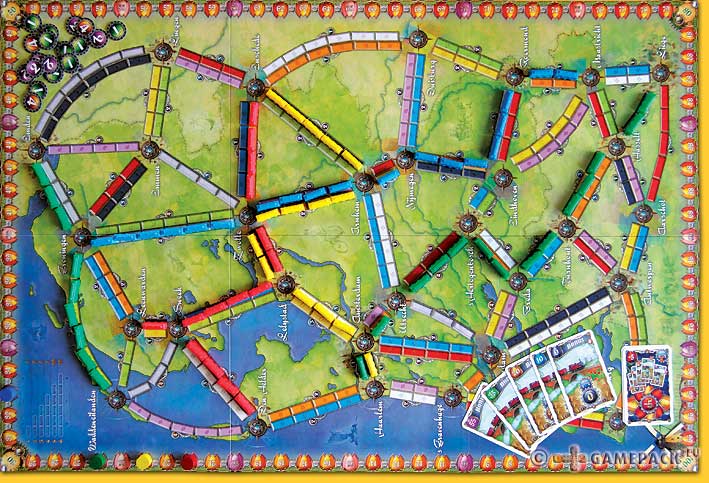 |
|||||||||||||
| 08.08.14 Since the release of the 'Spiel des Jahres' winner game several variants and expansions of Ticket to Ride have been released. This expansion with the Netherlands map is the fourth in a series of expansions. Each expansion gives its own twist to the standard rules of the game. In the Nederland expansion players have to pay toll to build on the double-routes, as indicated on the map. The first to build pays to the bank, the second pays to the first player. At the start of the game each player gets 30 money (bridge toll money), and the prices to build vary from 1 to 4. The player with the most money at the end of the game gets a nice bonus from up to 55 points. Whenever a player runs out of money he can take a loan card, and the money is paid from the bank. As drawback, this player is not a viable anymore for the end score bonus. The players that have some experience with Ticket to Ride know that 55 points are worth going for. In practice, this is less easy than it sounds. In the plays we tried this variant we observed that money moves from player A to B, from B to C, who pays again to A. At the end there seems to be an accidental winner of the end bonus so it seems (or feels). Playing with a focus on both end bonus and fulfilling tickets seems pretty difficult, so it seems, and raises the question whether this is possible at all. Maybe another way of playing is required, more focused on obstruction. When it appears that this expansion can also be played without the toll money, everybody in my gaming group is relieved and the game is played as usual. Even quicker than usual, because we have a home advantage: the ticket locations are quite easy to find on the map! At least with our gaming group this 'tactical' variant doesn’t work out well. Maybe a bit surprising, since with Africa (the mandalas), and Africa (terrain cards) the variations were picked up quite easily and worked out well. So, a nice to have expansion, this one, especially for the Dutch (and Belgians), but for us, as in real life, these tolls raise question marks… Edwin van de Sluis Ticket to Ride - Nederland, Alan R. Moon, Days of Wonder, 2013 - 2 to 5 players, 8 years and up, 30-60 minutesxxtop  |
|||||||||||||||
| x | |||||||||||||||
 |
Spyrium | ||||||||||||||
|
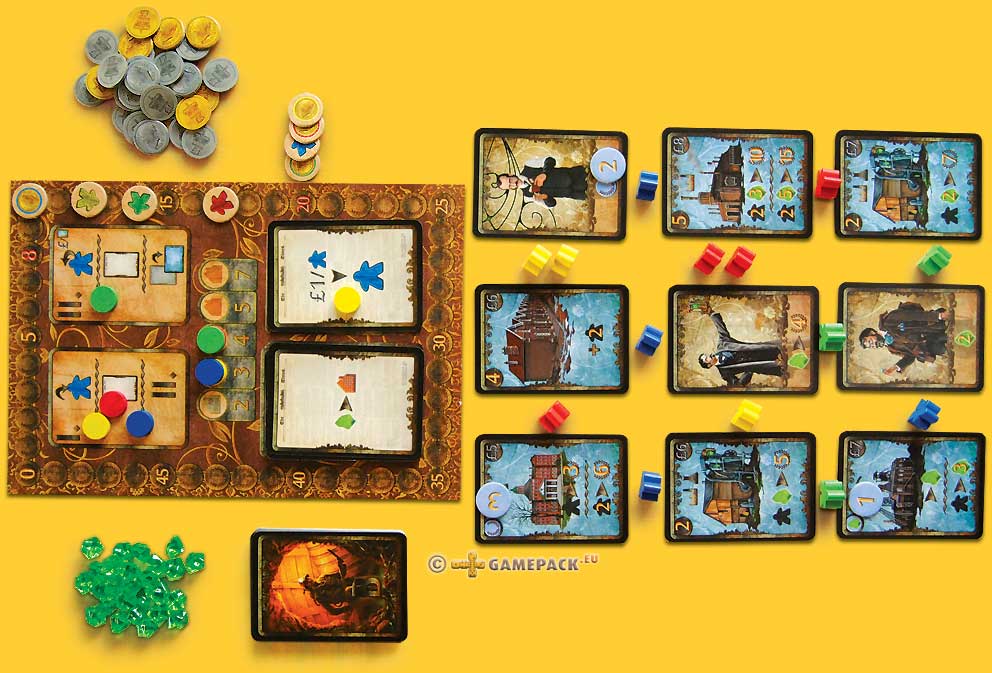
17.07.14 Spyrium is set in the Victorian Era in the British Empire, but apparently in a parallel universe. The mysterious mineral spyrium, which has remained undiscovered in our reality, made a big impact in that universe. This spyrium turned out to possess such unique properties as an energy source that James Watt and his obsolete steam engine were booed right off the industrial stage. Spyrium therefore lead to a revolution within the industrial revolution: that sounds like something we all want to have! |
 |
||||||||||||||
| x | |||||||||||||||
|
Ugo! | 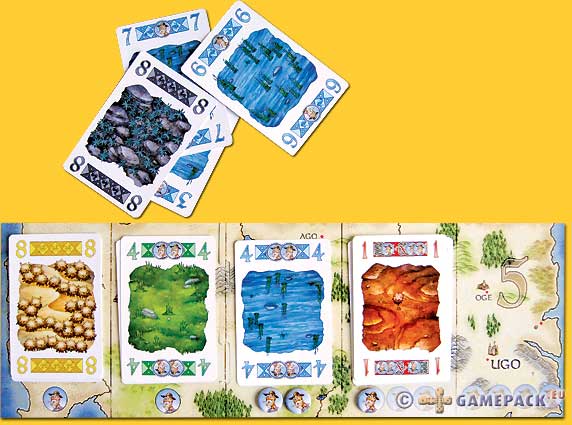 |
|||||||||||||
| 02.05.14 In this card game for two to four players with a game board each of the players try to win a couple of tricks, or not. It all depends. From the forty-five cards in five colours each with values from 0 to 8 ten are dealt to each player, the rest is set aside. A player starts by playing a card; other players must follow suit if possible and when this is not possible, a card of another suit may be played. The trick is won by the player who played the highest card, so the first colour played is not decisive to win the trick. The cards of the trick are placed on the player board, colour by colour, with the highest value on top. These are the points that can be won at the end of the game. But: there are more tricks, and when another trick is played, these must be put on top of the other cards. This way a higher value can be covered by a lower value. And there is a further handicap: only the first two fields on the player board are supported by farmers; only then the top card of the above lying colour is scored at game end. The other three fields need two to four farmers each to score - these are loose chips that can be earned with low value cards. Even more: when a field has a card on it, but not enough farmers, the player loses 5 points for each missing farmer. To have a hand of cards with high values might be fine to win tricks, but the low cards (1 and 2) are definitely needed to get to farmers to support the won trick cards. For the rest it is coincidence all around: the dealt cards determine somewhat too strongly what the chances for a player are in a round. After four rounds the game ends. This way, a very simply card game is spiced up with some extras that fascinates for some time, but gets a bit too repetitive in the long term. Ugo!, Ronald Hoekstra, Thomas Jansen & Patrick Zuidhof, Playthisone, 2013 - 2 to 4 players, 10 years and up, 40 minutes |
|||||||||||||||
| x | |||||||||||||||
 |
Seasons - Enchanted Kingdom | ||||||||||||||
|
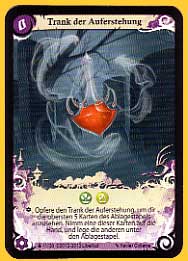
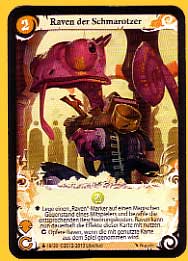
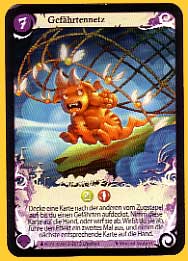
03.02.14 In the standard game Seasons 2 to 4 magicians are battling for the honorary title of Archmagician of Argos. This expansion set includes some additional material to strengthen them for the tournament. There are 40 new cards that elaborate on the 100 cards from the standard game. These 140 cards taken together provide a perfect mix of old and new, resulting in a refreshing new gaming experience. Of these new cards, the Raven der Schmarotzer is especially noteworthy: the player who enchants this card may place the raven token on an opponent’s card. From that moment on, he is allowed to use its functionality as if it were his own. Additionally, 12 tokens with special abilities are included. Each player receives three random tokens and is allowed to keep one of them, and use these abilities during the game. There are also cards that influence the gameplay for everybody, for example: enchanting a card always costs one additional energy, or: the richest player loses one crystal upon change-of–season, or: the drafting procedure is altered. One of these cards is selected randomly at the beginning of the game, and its effect lasts throughout the entire game. Last but not least, a starting player token is included! This should already have been part of the standard game: especially with four players with Analysis Paralysis, it is easy to forget who was the starting player. But that problem has now been solved. This is exactly what an expansion should be like: it is novel enough to be worthwhile, but not so over-the-top that it becomes an entirely different game. Also the new material is in proportion: the box is modest, and its contents can easily be stored in the box of the standard game if desired. The rules are also assembled with similar care and attention as the rules of the standard game; all the new cards are explained in detail. And, to top it off: it now finally becomes clear what the hole in the player board was intended for! Barbara van Vugt |
    |
||||||||||||||
| x | |||||||||||||||
|
Suburbia | ||||||||||||||
|
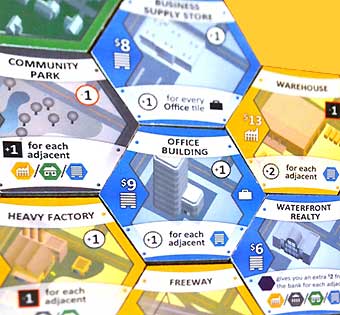
26.05.13 It’s like a plague! In these times of recession and construction stops one after the other game is published that has a theme concerning city building or civilization development. Card City, Milton Keynes, The City, Innovation and OddVille are a few of these examples in this category. Apparently the Frank Lloyd Wright’s among us keep cherishing their dreams, no matter what the economic times are. Again players have to build all kinds of buildings and fumble them nice and artfully next to each other in order to attract large numbers of inhabitants. |
 |
||||||||||||||
| x | |||||||||||||||
|
The Cave | ||||||||||||||
|
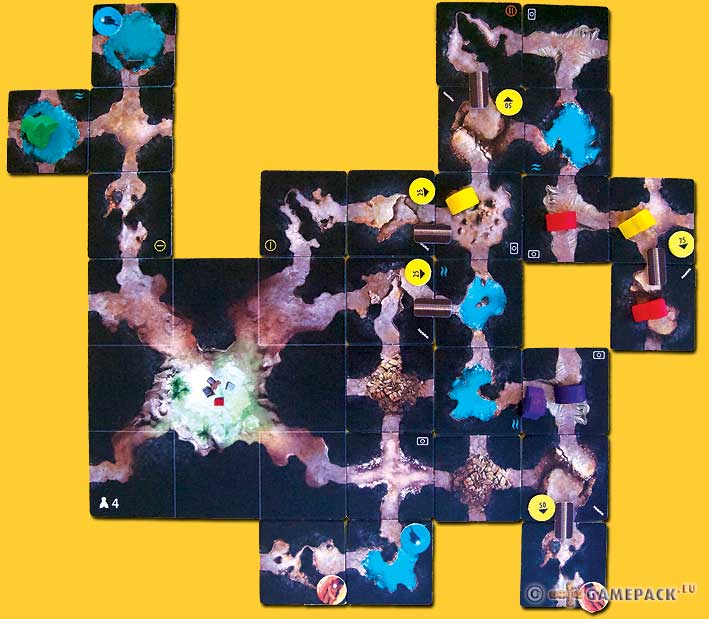
23.02.13 A new cave has been discovered! Two to five teams of speleologists are anxious to get inside and explore the underground wonders. At the base camp they can get the necessary equipment, oxygen, consumables and ropes. If they wander too far from the camp, they risk to get stranded without food... The players have a backpack with eight slots for consumables, rope, camera, oxygen and a raft. All teams begin in the base camp, and they have five action points to spend each turn. Discovering a new tile costs one action point, just like moving the team one tile further or attaching a rope when there is a height difference between tiles. Diving with oxygen costs two action points, and squeezing yourself through a very narrow passage costs two to four action points. There is a lot going on inside the cave. All tiles with narrow passages are supplied with a token, and the same goes for underwater tiles and wonder tiles. The first player to reach the tile and fulfil the criteria gets the token: these score points at the end of the game. For example, to get a wonder token a player has to make a picture of the wondrous cave. Of course this is only possible if he has packed his camera! The underwater tile can be merely traversed with a raft, or explored more thoroughly by diving with oxygen. Only in the latter case the player receives the token on the tile: you are hardly likely to discover anything interesting from a raft... Whenever a player starts his turn outside the base camp, he immediately has to discard a consumable. Considering that you also want to carry a raft, a camera, oxygen and some rope, you will understand that it is difficult to survive for too long in the cave! Fortunately, the backpack can be refilled at base camp, at the expense of two action points. Not only food, but also oxygen and ropes are used along the way, so it is essential to restock every now and then. If you want to go a bit further away from the base camp, you can pack a small camp in your backpack. It uses two valuable slots, but the camp itself has a storage capacity of four slots. The camp can be built up somewhere in the cave, and can even be repacked to put it somewhere else later on. Because, once all the surrounding tiles have been discovered and all tokens have been claimed, there is not much left to do except to pack up and look somewhere else. Going too far is not wise: it takes you a lot of turns and food to get there, and then you still have to get back before you can restock! It is smarter to put up your own camp within a narrow circle of five action points from the base camp, so that you can always get back within one turn for new supplies. Luckily there is ample opportunity for discovery around the camp: the four player camp has six tunnel exits, so you don't necessarily have to go far to find something new. When the last tile has been placed, all players have three more turns to return to the camp. There, the victory points are scored for tokens, majorities of tokens, and for the depth a player has reached. Teams that couldn't reach the camp in time do not participate in the scoring! But no worries: it is really not too difficult to find your way back to the camp in three turns. The Cave is a successful exploration game. There are enough different elements to keep the game interesting and exciting, but not so many that you are overwhelmed with options, and that it takes a long time to even set up the game - those problems are clearly visible in the similar game Lost Valley. The Cave is a quick game, except for those few occasions where you really want to calculate the exact number of turns and compare it to the available resources: can I just dive into this underwater tile, or will that cause me to run out of food and perish? Barbara van Vugt |
 |
||||||||||||||
| x | |||||||||||||||
|
The Doge Ship | ||||||||||||||
|
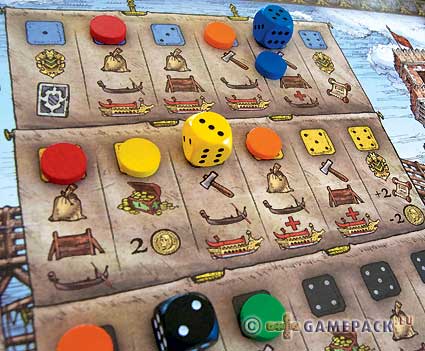
20.01.13 Building a doge ship, how hard can it be? Just follow the IKEA manual with the included allen key and before you know it, a beautiful Døgi is floating in your pond! |
 |
||||||||||||||
| x | |||||||||||||||
|
Stone Age - Mit Stil zum Ziel / Style is the Goal | ||||||||||||||
|
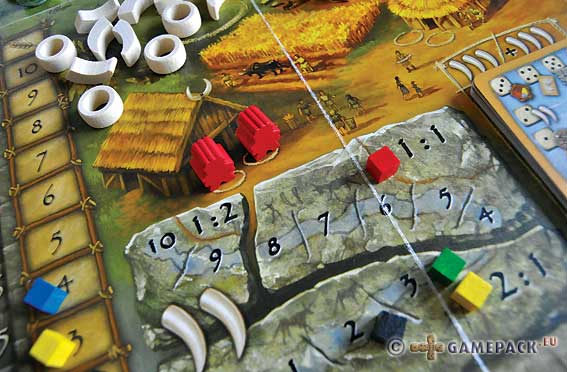
07.05.12 As the title already indicates: the fact that we have only just outgrown our existence as cavemen doesn't mean we don't have taste! In Stone Age we focused on survival, but that was só 10.000 BC! By now we want more than just that. Jewellery, decorations! A couple of elephant's teeth over the door is nowadays regarded as very chic, just like some beautiful rings and necklaces to accessorise our bear skin clothing! These items also mark the emergence of trade. The expansion set contains material for a fifth player, new cards and huts, and a collection of teeth and rings, and a small additional board that can be placed on top of the original game board. This board depicts the trading track. If a player places two men on this location, he may advance his cube two steps on the track and take two teeth from the supply. When purchasing a hut or a card, players are allowed to trade. Depending on their position on the trading track, they can exchange 2 resources/teeth for one resource of their choice, or even 1 to 1, or 1 to 2. Another new location on the board allows a player to pay six teeth and take two cards: one face-up, and one blind from the drawing pile. This requires a lot of teeth that can be obtained by hunting, just like food. The players may choose to convert his dice roll into food only, teeth only, or any combination. The rings are purely aesthetic, they represent three teeth. The new possibilities in the game ask for a different strategy. The trading option makes cheap resources even more attractive: they cost less die-power, and can always be converted into gold when necessary. Because advancing on the trading track requires two valuable men, the chance is small that there are players willing to block this position every turn to deny other players the opportunity. In the original game, food tends to become less important later in the game when players have advanced on the food-track. However, in the expansion the players keep hunting because this is the only way to get teeth. This leads to a more uniform distribution of the playing figures over the board throughout the game, and leaves enough room to accommodate the fifth player. Some expansion sets are played once, only to be returned to a dusty shelf because they simply do not add enough to the original game. This one, however, has earned itself a permanent position inside the Stone Age box (although the first print run box already was quite stuffed to begin with...)! Barbara van Vugt
Stone Age - Mit Stil zum Ziel / Style is the Goal, Michael Tummelhofer, Hans im Glück, 2011- 2 to 5 players, 10 years and up, 60-90 minutesxxtop |
 |
||||||||||||||
| x | |||||||||||||||
|
Santiago de Cuba | ||||||||||||||
|
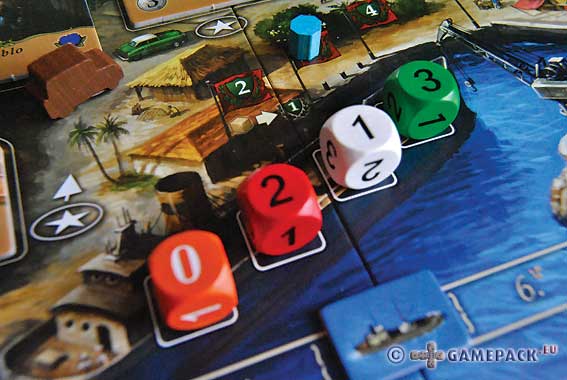
07.04.12 This time it is all happening in the harbour of this Cuban city. A ship is waiting to be loaded with four kinds of goods, while there are five kinds in play; sugar cane, citrus fruit, tobacco, rum, and cigars. Demand is unpredictable, and determined by the throw of the five dice in the corresponding colours of the goods. Surrounding the harbour different 9 Cuban tiles are randomly placed, each showing a different Cuban personality. Around these tiles 12 different building tiles are randomly placed, a coloured symbol linking each building to a character. A player’s turn consist of moving a car around the harbour, stopping in front of a Cuban’s house. One step is free, for more steps pesos must be paid. At the Cuban’s house, you may use his or her function, and then a corresponding may be used, by placing a paying piece on the tile. The Cubans typically give goods or money, while the buildings can for instance be used to transform tobacco into cigars, or deliver goods to the ship in between. Real deliveries can only be made when the car returns to the harbour. Deliveries are made in a 'Puerto Rico' style, so player after player, and kind after kind. Each delivered good gives 2 to 4 victory points, and when the demand is fulfilled a new ship 'arrives', with a new demand of goods. After seven shipments the victory points are counted, and the player with the most wins. |
 |
||||||||||||||
| x | |||||||||||||||
|
Scheibenwelt / Discworld | ||||||||||||||
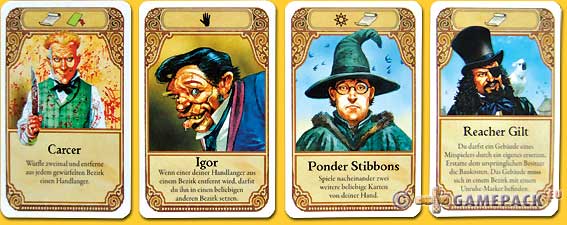
| 06.03.12 Scheibenwelt / Discworld is a board or actually card game based on the Discworld fantasy books by Terry Pratchett. All players receive a secret personality card describing their personal victory conditions. The player that has reached these conditions at the beginning of his turn may claim victory! The conditions vary from things you will have to do yourself, like having a majority in a specific number of areas on the board, or a specific amount of cash, to things that are less under your control, like the condition that nobody else has claimed victory when the drawing pile is exhausted, or the presence of eight trouble markers on the board. The game itself mainly consists of playing cards. Cards contain some general actions like placing a minion or a building in a specific area on the board, and often a special action that is connected to the character depicted on the card. If you know the books this is probably more fun, but for your average Discworld layman the actions seem all the same and the game is rather boring. Because of the hand card limit of 5 you have only little influence on the way the cards come. The biggest disadvantage is that experienced players will soon know who has which secret victory condition. The actions on the cards are annoyingly often associated with bugging, pestering and hindering, so there is ample opportunity to prevent the almost-winning player from actually winning, resulting in a frustratingly long game. Barbara van Vugt Scheibenwelt / Discworld, Martin Wallace, Kosmos, 2011 - 2 to 4 players, 11years and up, 60 minutesxxtop |
 |
||||||||||||||
| x | |||||||||||||||
|
Tschak! | ||||||||||||||
|
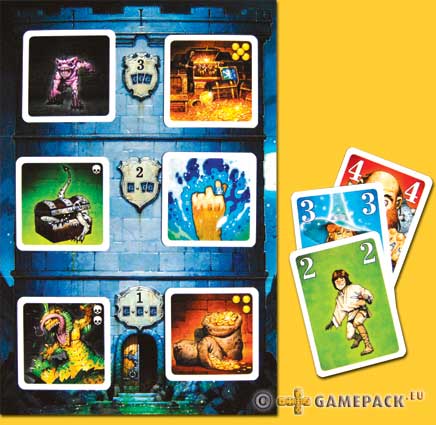
03.01.12 A group of adventurers travels the country. They visit four keeps each consisting of three floors, and not just to be sociable: on each floor a valuable treasure is hidden, which is guarded by a monster. Our task is clear: beat the monster and claim the treasure! Unfortunately there is competition: the teams of our opponents have the same intention, and they show up at the same moment at the same keep; a very unfortunate coincidence... The player with the strongest team wins the treasure, the weakest team is torn apart by the monster and receives penalty points, and the teams in-between get nothing at all. Each player receives cards depicting wizards, dwarfs and warriors with different values. For each floor of the keep, a team must be assembled consisting of one wizard, one dwarf and one warrior. On the first floor, all players first place one card, then the second one, and then the third. This allows players to watch the other teams take shape, and react to this (He already has a pretty strong team, I think it's time to play my 5-wizard now!). On the second floor players start with one card, but the second and third card are played simultaneously. And on the third floor, the entire team is placed face-up in one go! After the third floor, all players have one remaining card. The player with the highest value card receives three gold, the second place receives two, and the third place one. And then the whole troop moves to the next keep! But they don't have to go over the entire procedure again using the same cards: the cards are passed on to the neighbour. After four keeps, all players have had the opportunity to play with each of the four hands. When all the keeps have been emptied, the players count their money: coins, and gold depicted on the treasure cards, minus the skull symbols on the monster cards. The richest player wins. This simple card game should be regarded as a 'filler' of approximately 30 minutes, and as such it is an okay game. However, the game is neither very exciting nor innovative; the 4x3 rounds are all very similar and after a while it becomes a bit tedious. Since there are more fun games available in this category, most likely Tschak! won't make a regular appearance on the table. Barbara van Vugt |
 |
||||||||||||||
| x | 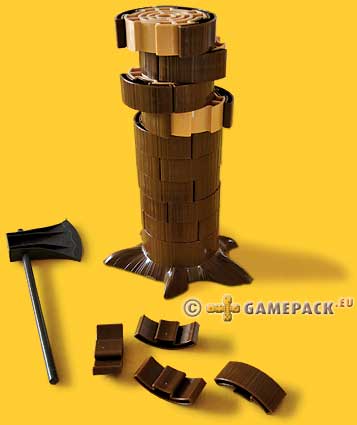 |
||||||||||||||
|
Toc Toc Woodman | ||||||||||||||
| 08.11.11 No, this can't be fun! Is this a game? Well, we'll see! With this distrust 'Toc Toc Woodman' is set up: a trunk as base, and the center pieces with each four barks put on top of it. A plastic axe is at the players disposal. So, here we go - but first we have to read the rules. These are surprisingly short: each player may hit the tree two times with the axe. Points are awarded for the barks that come off, one point each, and minus points if a center piece falls off : five minus points each! Gently hitting the tree two times, and moving a center piece almost out balance already can be very tactical; or take advantage of a secure situation and chop the tree real hard when there is no risk. The upper center pieces have less friction; these require a more subtle tap than pieces in the middle. Players get off their chairs, walk around the table to inspect the tree and decide where to hit it to get a bark off, yes it is a serious affair, and chances are seriously weighed! 'Toc Toc Woodman' is a fine game to close off a games day or evening after a brainteaser has hit the table. Our thoughts go to 'Age of Steam' or 'Caylus', wherein not very much fun can be detected. After such a game it is a relief to blow off some steam! The distraction lasts ten minutes - we hardly can speak of a game for this category, but it is characteristic that all players want to play once again; it is fun, sheer fun, and laughter! We'll have none of the recommandation on the game box 'The Smash-Hit Korean Game'; the culture is a bit too far from us - one likes meat, the other fish. But apparently the game has something general by which it also appeals to us Caucasians! The box illustration, by its white and red colours, together with the bearded woodman, gives a fitting Christmas atmosphere, so it's an appropriate Christmas gift. The publisher who knows how to act fast and manages to license/launch this game into the European shops, has fully understood what the consumer wants: inelaborate chopping! Toc Toc Woodman, Justin Oh, Mayday Games, 2011 - 2 to 7 players, 5 years and up, 10 minutesxxtop |
|||||||||||||||
| x | |||||||||||||||
|
Trajan | ||||||||||||||
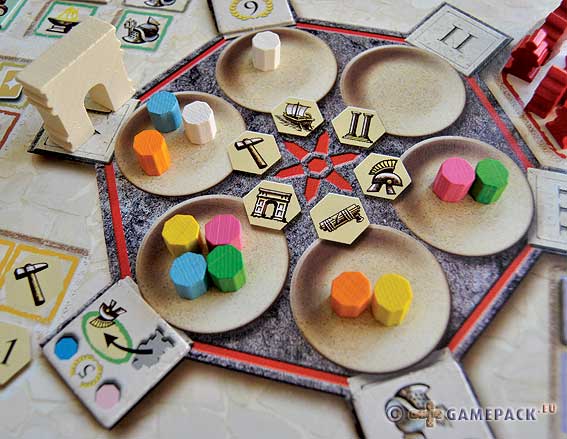
| 16.10.11 Tiles! Construction tiles! Forum tiles! Trajan tiles! And some ships too. That the Roman Empire was large and immense becomes once more evident when 'Trajan' must be set up. Tiles are placed on the central board from the Senate in Rome to the outer provinces like Brittannia. Round markers, commodity cards, markers and demand tiles find a place around the board, after which each personal player board also is geared with all kinds of stuff, of which the 'rondel' in disguise is the most striking element, more so because two random coloured action markers are placed on each of its fields. Oh, and the game is about points. These points can be scored in the outer provinces, in the Senate, the Forum, when building, shipping, meeting the requirements on a Trajan tile, and, if a player has managed to acquire one or more bonus tiles, a player scores at the end of the game for these too. These Trajan tiles have to be acquired in an action - but we already start with three Trajan tiles on our player board - and the tile is placed at the outer circle of the rondel, right at the position of the Trajan arch, that is moved clockwise to a next vacant spot. When a player reaches a field that also has a Trajan arch at it, and the colours of the action markers match those on the Trajan tile, the points on the tile are scored, and any other priviliges on the tile are awarded and come into effect. Such as placing an army. Or two. Or draw two commodity cards, or deploy a worker. But how does the rondel actually work? At the start of his turn, a player chooses which field he wants to address. He then takes all the action markers from that field and places them clockwise, one by one, on the consequetive fields. The last field where a marker is placed determines the action a player can perform, such as advancing a position in the Senate and score the points that come with them - whereby at the end of a quarter the two most advanced players may take a bonus tile that, as already mentioned, might give additional points at the end of the game. Or the player performs the shipping action and takes a commodity card or plays one or more commodity cards and scores for them. Or move the military leader to an adjacent province and take the tile that was placed there at the beginning of the game - if it wasn't already claimed by another player. Or place a worker, take a construction tile and score for it. So the game is packed with apparent opportunities, but it is hard to plan and get everything in place on the rondel. Soon there are clusters of markers and the desired action can not immediately be reached, let alone that the requirements of aTrajan Tile can be met. It feels if we are made fun of: so much richness in points, and yet so difficult to get them. We feel a bit fooled; apparently the rondel seems very tactical, but it takes several turns to get things done. It seems a bit that chaos rules, and that would be a pity for a game that in essence is attractive but on the other hand carries a lot of ballast. Trajan, Stefan Feld, Ammonit, 2011 - 2 to 4 players, 12 years and up, 30 minutes per playerxxtop |
 |
||||||||||||||
| x | |||||||||||||||
|
The Boss | ||||||||||||||
| 10.10.11 'I will make him an offer he can't refuse'! Put the cotton wool in your cheek, because we are going to play godfather again! Only we are a bit more subtle armed now, with cards, and this way we try to outdo the other players in three to five rounds. Depending on the number of players the struggle for power erupts in four to six cities. Each city shows what is at stake and what the risks are: money, a fatal shooting, the jail, or an injury. The first card of every city is placed face down, this is the card that can be earned. The other cards are divided among the players. On each turn, a player can take influence in a city with one or more of his thugs; at the end of a round any player with the most influence in a city earns the face down card that goes with that city. After placing one or more of his thugs, the player has to play any one card that he places face up at the corresponding city. In this way, gradually it will become clear what lurks below the face down card, so taking too much influence too early is definitely not recommended. A player only has a six gangsters, so it is advisable to be economical with the available resources. As an extra, he has three mercenaries in the game he can use once to give him the extra man to achieve a majority if necessary. Playing with two players, the potential is clear and the game offers players a fun challenge, one can not wait to play it with more players. But guess what? With more players all play their cards in silence, and little remains of the hoped relaxation. Furthermore, the game takes way too long for what is offered, sixty minutes for such a lightweight card game is really too much. The game idea is nice, but gameplay stays behind. Too bad, but we choose to reject the offer. The Boss, Alain Ollier, Blackrock Editions, 2010 - 2 to 4 players, 10 years and up, 20 tot 60 minutesxxtop |
 |
||||||||||||||
| x | |||||||||||||||
|
Schwarzer Freitag / Black Friday | ||||||||||||||
|
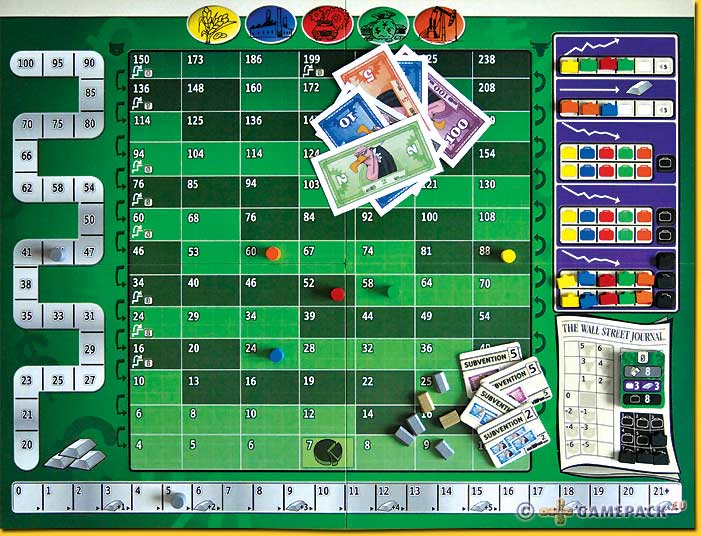
05.12.10 'Schwarzer Freitag' is a stock exchange game, that's all there is to say about it, theme-wise. Players try to get as rich as possible by buying and selling shares -little suitcases- in five different colours. And it's not about the money, but about the silver that we buy with it. The silver price increases in the course of the game, so if you buy too late you pay too much, but if you buy too soon, you exhaust your financial resources and may not be able to participate in the rest of the game. When the silver price hits 100$, the game is over. The game is full of tiny little rules that are virtually impossible to remember without a player aid -not included: when selling shares the value drops, but when buying shares the value doesn't increase. The value increases when three shares of the same colour are on one of the lists, or when the last share of a colour is removed from the market. Shares from the list go into the bag, shares from the bag go to the market. If one black suitcase was drawn from the bag it goes back into the bag, but if more than one, they go to the general supply... Friedemann, did it really have to be this complicated? |
 |
||||||||||||||
| x | |||||||||||||||
|
Schweinebande | ||||||||||||||
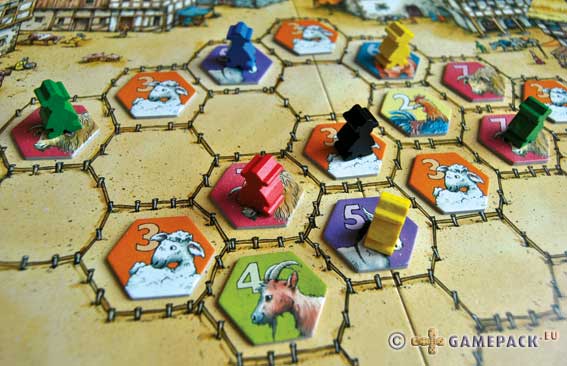
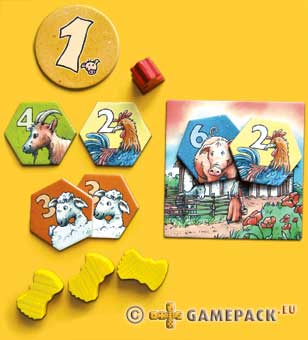
| 05.12.10 During four rounds players collect animals: either four similar, or six different. First, the animals are placed on the market: the chits are placed face down. Then, in a turn, a player turns one chit of his choice face up, and decides wether he wants to place a farmer on it; this animal is secured, and maybe more later. When all chits have been turned face up, play continues with the player who had to pass first. He chooses a farmer in his colour and decides which direction it will look one lane further down the market. He may take all animals in this lane and put them in his supply but must stop when another farmer is blocking his view. When a set of four similar animals has been collected, one is placed in the farm house for scoring as many points as its value; the other chits are out of the game. In a set of six different animals, the highest one scores. All the remaining animals in his supply that do not yet form a set must be fed: with one or more animals from that supply. So, a 'five' donkey is enough food for a 'two' chicken and a 'three' sheep; the donkey goes out of the game. A surplus of food can be kept for a future round. In the last round a player may form a set of four different animals, but only the lowest one is taken to the farm house and scores. There also is a pig bonus (as in 'Schwein haben': 'to have some luck'): in the last round a player with a set of four pigs may score two pigs instead of the usual one pig. 'Schweinebande' presents itself as a family game and this it what it appears to be at first sigth: place a farmer, collect animals, how difficult can it be. But there is an enormous discrepancy between this simpleness and scoring and a young player can easily become confused. Just this scoring mechanism alone makes it a 12+ game. 'Schweinebande' can be marked as pastime, but besides this feature it has very little to offer. It may be diverting during the Holiday Season, but in the new year something different has to be put on the table quickly! Schweinebande, Stefan Dorra, Hans im Glück, 2010 - 2 to 5 players, 8 years and up, 30 minutesxxtop |
 |
 |
|||||||||||||
| x | |||||||||||||||
|
Sobek | ||||||||||||||
| 05.11.10 How many variants on card trick games can the world hold? In any case, we did not know this one with an Egyptian setting. Two to four players get blindly dealt two starting cards from a supply of grain, ivory, ebony, cattle, fish or marmor. From a window of nine cards a player in his turn may choose any one card from the four leftmost cards, in order to collect and play a set of at least three identical cards. At the end of a round a player scores for the amount of scarabs on the cards, multiplied with th amount of cards in a set of that kind. When a player does not take the leftmost card from the window but skips any because that card gives him more scarabs, he must take the skipped cards and place them under his corruption marker. A player who at the end of a round has the most cards under his corruption marker goes back on the score track: as many symbols of the same kind he ended on for every ten points scored. This can be quite a heavy punishment! Special character cards are placed face down in the window; these have special capabilities such as stealing a card from another player's hand, or removing all cards from any one kind under your corruption marker. When any of the first five sets are played, a player may choose an event from the event pile that is executed at once: a player is given a curse that counts as two cards under his corruption marker, a set is upgraded by two scarabs, and more of the like. The game ends after the third round or as soon as a player has reached the 100 points mark - and stayed above 100 after the eventual corruption punishment. Sometimes one can be brief: After 'Jaipur', GameWorks has managed to deliver yet another nice, swift and fast-paced card game that feeld fresh and original! Sobek, Bruno Cathala, Gameworks, 2010 - 2 to 4 players, 13 years and up, 40 minutesxxtop |
|
||||||||||||||
| x | |||||||||||||||
|
Santa Timea | ||||||||||||||
| 24.05.10 In the card game category 'winning tricks' 'Santa Timea' is the variant whereby a player must try not to win any tricks: each card is the amount of penalty points that is printed on it. At the start of the game a display of three wind direction cards is turned face up; each round players play for the first card whereafter the display is refilled to three cards again. This way players have some clue of what kind of misery to expect! Each player plays a card from a hand of twelve; these navigation cards go from 1 to 14. When a wind direction card is countered with a navigation card of the same colour, the card has the printed value. A yellow '13' navigation card that counters a red wind direction card only has half its value, and if it would have been a green wind direction card the value would even get reduced to zero! The player that played the lowest value must take the wind direction card, after which a new round for a following card is played. After twelve rounds the penalty points are counted and 1 to 5 victory points awarded, and a following sequence of twelve rounds begins. After five of these sequences the player with the most victory points has won. There is a special card, the pirates bride, that when played counts as the same value as the previous player just played and when these two players now are tied in having played the lowest value, the player with the next higher value must take the wind direction card as a penalty. Also the rules give a player the possibilty to collect a set of penalty cards from 1 to 3 of the same colour, nullifying the penalty points when complete. This gives the game a nice touch: should a player try to collect the '3' to complete a set? 'Santa Timea' is a nice trick playing game that fails to hold the attention for the full five sequences; its gets too repetitive by that. But when a game is limited to only three sequences, we quite confidently can assign a 'plus' to it! Santa Timea, Dirk Liekens, Argentum Verlag, 2009 - 2 to 5 players, 10 years and up, 30 minutesxxtop |
|
||||||||||||||
| x | |||||||||||||||
|
Stonehemge | ||||||||||||||
|
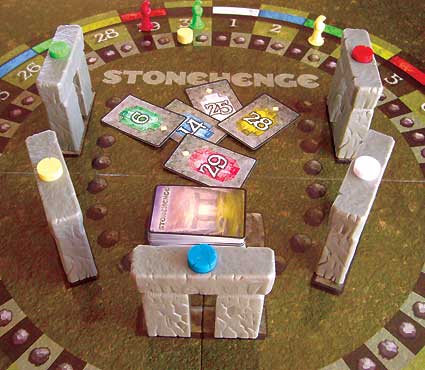
Five well-known authors have developed a unique game with Stonehenge as setting, and the five resulting games have been combined in one box. The authors have each chosen a different perspective, which has resulted in a game of bluff, a political game, a war game, a racing game and an auction game. The box contains a game board depicting a map of Stonehenge, with room for the five typical stone formations (trilites). Stonehenge is surrounded by a circle with numbered squares. We are also presented with plastic blocks and discs in six different colours, six druids, and a deck of cards. So far so good, but what can we do with all this material? Sceptics will probably say that these projects, where the theme or concept is more important than the game itself, are not likely to result in very good games. Stonehenge proves these sceptics absolutely right. Luckily, it's not all bad: the auction game by James Ernest is okay, although it's not very deep, and the racing game by Mike Selinker is also acceptable, although it's rather dim and way too long. The absolute low is the political game by Bruno Faidutti: sorting out the required material takes more time, and is actually a lot more fun, than the game itself. Generally all games lack depth. As for the rules, these are often unclear and incomplete, and the design and material is uninspiring. One box with five games: it sounds like a good deal, but in this case, none of the games justifies a purchase. Barbara van Vugt |
 |
||||||||||||||
| x | |||||||||||||||
|
Strozzi | ||||||||||||||
|
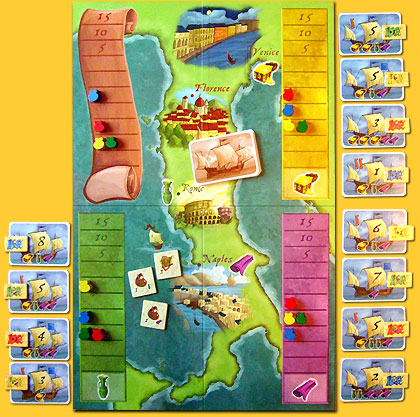
24.11.08 The famous Italian commercial families Strozzi, Medici and friends, who have already played a role in many games before, are on the outlook for incoming ships with merchandise. The ships have different properties: speed, goods, scrolls and promotion tiles. All players have three different flags in their colour that they can use to claim the incoming ships. If you use your pirate flag you will definitely get the ship; if you use a ware flag or a ‘+1’ flag you can still be outnumbered by the pirate flag of another player. The player that wins the ship puts his flag on it, and places it in one of the three ports (one where he doesn’t have a ship yet). Each port contains a scoring track for one ware; if this ware is also depicted on the ship that he claimed, the player moves his marker up on the track. If the ship depicts a scroll symbol, he also moves his marker on the scroll track. After all players have used their three flags to claim three ships, the round is over; in each port money is awarded for the three fastest ships, and for the three highest positions on the scoring tracks. Everybody takes back his three flags, and a new round begins with a new pile of ship cards. The markers remain on their positions! The game lasts three rounds, and after the third round, the richest player wins the game. |
 |
||||||||||||||
| x | |||||||||||||||
|
Tinners' Trail | x | |||||||||||||
| 05.09.08 Tinners’ Trail is the first game of Martin Wallace’s new Treefrog line. All the games in this line will only have wood playing pieces, and the games will appear following a pre-set pattern: a multiplayer game, a three player game, a two player wargame, a train game, and back from the start. It seems to be a strange idea to put up all these limitations to yourself when designing a game - there’s also a (green) publisher that insists on having the letters Y and S in all its game names (and in case of the green publisher the inevitable F-word!) - because logically a game will in the best case only be as good as a game made without such limitations, and in most cases will be worse. So how about Tinners’ Trail? In the nineteenth century, England’s mining industry was booming, and it is up to players to make as much money as possible from mining copper and tin, and convert this money into victory points. Some of the areas in the map start with a standard number of tin and copper cubes. Depending on the result of the three dice, some tin, copper and water may be added. At the start of every round the selling price for tin and copper is determined by the dice, and the copper price scale is much steeper than the one for tin. Then the players can pick their actions. Not in a pre-set player order, but by using a time track: every action costs 1 to 3 weeks to perform, and the active player advances that many weeks on the time track. Then the new active player is the one who is the furthest behind on the time track, this may also be the player who just performed an action. An important action at the start is building a mine. To do this, the active player needs to designate an area, and then an auction is held for the right to build a mine in that area. The mining action allows a player to take two ore cubes of his choice from one of his mines. For each ore cube this costs 1 money per water cube in the area, because the water complicates the mining operations. The digging causes more water to flow into the mine, so after the mining action one water cube is added to this area. There are also several improvements available each round, like miners or ports, and these improvements can lower the water level in a mine, increase its mining capacity, meaning more than the standard two ore cubes can be mined in a single action, or both. Worth mentioning is the so called adit, a tunnel between two areas that lowers the water level and makes more ore cubes available in both these areas. This is the only way to ‘refill’ a depleted mine with ore, but at a cost of 3 weeks it is also time wise the most expensive action available. Finally a player in need of cash can sell pasties to the miners to earn 1 money, and a player who can’t or won’t do anything else can pass for the round, to get a better starting position in the next one. After taking all their actions, the players must sell all the ore they mined this round for the current selling prices, and then they may invest their money externally; in effect this is buying victory points. In the earlier rounds you get more victory points for your money then in the latter ones, but any money invested this way is unavailable to you for the rest of the game! After that two empty areas are supplied with ore and water and then the round ends, and the game ends after four rounds. Only the victory points from the external investments count for determining the winner. Tinners’ Trail combines the best of both worlds: like most Martin Wallace games it has a well implemented theme and difficult decisions, but this time without the overly complex and ambiguous rulebook that is often a feature of these games. There is also a lot of dice throwing again, but it is definitely not a strongly luck dependant game. This is because the dice merely determine game conditions which are then known to the players when they take their actions, rather than one’s score being directly dependant on the result of the dice, as is the case in Struggle of Empires for example. Especially taking into account its playing time Tinners’ Trail is a surprisingly appealing and challenging game that sets high expectations for the rest of the Treefrog line! Ugur Donmez Tinners’ Trail, Martin Wallace, Warfrog, 2008 - 3 to 4 players, 13 years and up, 75 minutes |
|
||||||||||||||
| x | |||||||||||||||
|
The Golden Age | ||||||||||||||
|
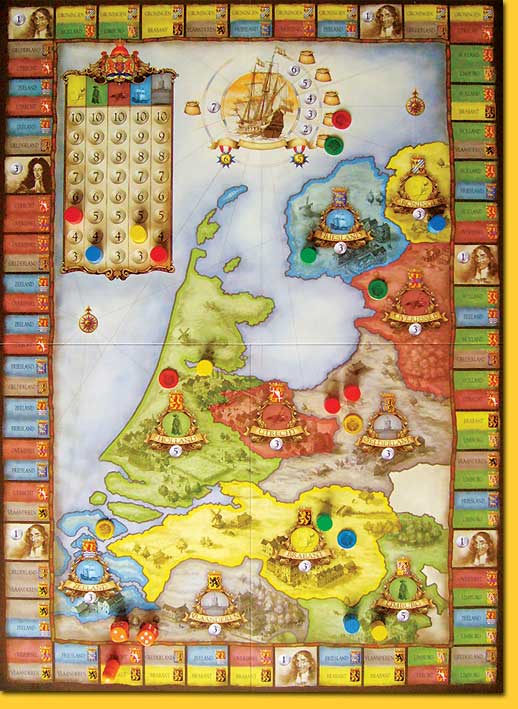
During the seventeenth centry the Dutch established an extensive trade network in ‘The East’: from Africa and the coast of India and Indonesia to as far as China from where the exotic goods such as pepper and silk were shipped that were converted into cash on the Amsterdam goods exchange. Through the in consequence acquired wealth this century in Holland is known as ‘The Golden Age’. In the board game of the same name three or four players are making money and with this try to get influence and points. The board shows a map of the Netherlands during the seventeenth century. In the various provinces players can take actions, mostly consisting of paying money to take a blind card from one of several categories such as culture or sailing. This sometimes earns instant money in case of one card, but mostly a set of two or three will have to be collected that earn the desired money, albeit somewhat more than for one card. Slowly players prepare for their trip to ‘The East’: when turning in three different sailing cards - each sailing card can be bought from a blind deck as an action in two separate provinces - a player may place an influence marker in the colonies. With this influence marker a player again can make money, sufficient more money that can be used to bear the costs of the actions or to act as a maecenas for a painter. On the art cards that one famous painter is depicted: Rembrandt van Rijn. These cards, if fully financial covered, are worth points, some more than the other, of course. |
 |
||||||||||||||
| x | |||||||||||||||
|
Shanghaien | ||||||||||||||
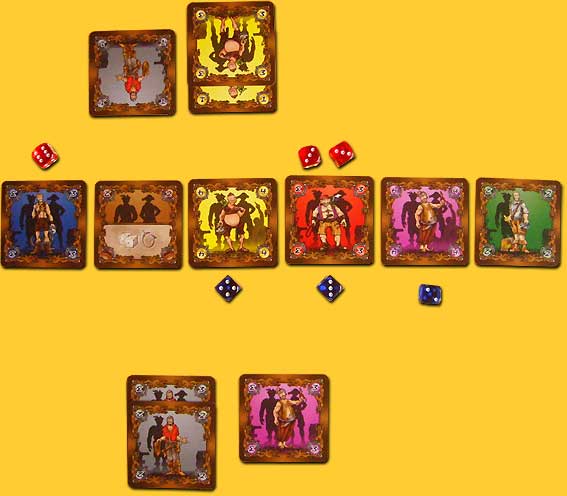
| 07.04.08 Shall we skip the theme, shall we? Because we are merely going for some old fashioned dice throwing and acquiring cards game. Two players try to claim cards with their dice; these cards score points at game end. Six cards are turned open - there are eight colours in the deck, five cards per colour each with value 1, 2, 3, 3, 4 - after which a player starts with throwing two of his six initial dice. From these two he chooses one to put next to a card, where the die has to be placed in line, so a die '2' has to be placed with the second card in the row. The first player of a round has some freedom of choice, as by placing his first die he decides how the count is done: from left to right, or from right to left. Then it is already the next player's turn: throw, and place one die with a card. The first player now has five dice left; again he takes two, throws, and places one with a card. This continues until a player only has one die left and has to pass. The cards now are divided among the two players: where there is only one die of a player, the card goes to that player. If both players have dice next to a card it goes to the player who has more dice next to that card. If still tied, then adjacent dice are taken into account. Unclaimed cards are discarded, and a new round begins by placing a new set of six cards. After eight rounds the game ends. Now the cards each player has collected are compared. This is solved quite in the spirit of Knizia: the player with the highest score of a colour gets the lower score of the other player, who ends empty handed for this colour. The player with the highest total score wins the game. This all sounds very simple, and yes, it is. What makes it so much fun is that despite the involvement of dice there are some tactical decisions to make. Because when a player has four cards of a colour, it is important for both players to get the last card, especially if this card is a '1'. If all five cards are collected, that player gets the full score of 13, but if his opponent gets the '1' het only gets 1, that being the lesser score, and his earlier efforts in getting the four other cards have been to no avail. If the desired cast is not there, it could be useful to put the die next to the desired card if possible, to thwart a possible tie. Also there are special cards that can be claimed that offer rerolls or modifiers of the die. 'Shanghaien' is a very nice and playful two player game that sure will hit the summer and vacation table very frequently, but already has its devotees this spring season! Shanghaien, Roman Pelek & Michael Schacht, Abacusspiele, 2008 - 2 players, 8 years and up, 20 minutesxxtop  |
 |
||||||||||||||
| x | |||||||||||||||
|
Toledo | ||||||||||||||
| 24.02.08 Melding swords, possibly with an inlay of jewels, and bring them in a hurry to the castle; that is the task the two to four players in Toledo have to accomplish. Whoever does his utmost will walk away with the most valuable sword that in itself is no guarantee to win, but at any rate gives the necessary points for it. Each player has five tokens that start in the cathedral; faith in this era still is professed with the sword in hand. A single road leads to the finish, the route itself is divided in nineteen fields. Some of these are already preprinted but the majority of them are empty and will be filled with the workshops of the players as a possible action in their turn. An other action is moving a token by playing a numbered card. The token is moved that many fields, but may end its move only on already built workshops or preprinted fields. At these workshops, steel can be taken, or jewels. When the workshop is owned by a player this can be done for free; if the workshop is owned by an other player a payment must be made: a number card, depending on the progress of the token on the road with value 1, 3, or 5. In a turn, a player may play as many cards as he likes, but all of these must be of the same value. There are shops where the iron can be melded into swords; there is a display with possible ccombinations. Ofcourse a sword that needs only one iron brings less points than one that needs four iron and four jewels. Therefore, in general players will go for the higher valued swords, trying to break a tie with a low value sword in the end phase of the game. Melding a sword is not sufficient however; the points for it must be secured by bringing a token to the alcazar. Also, time presses, as the game ends immediately when a player has brought three tokens to the castle. Along the road there is a studio where players can buy paintings, bringing immediate points with no need for a token in the castle. The cards in this stack decrease in value, so again it are the early birds that take away the best points. Ofcourse all players stumble over each other, trying to get to a position that provides cards, iron, or jewels that may be occupied by the time they have the right card(s) for it. Luckily there is a possibility to expel a player by means of a duel: three number cards are drawn - on each card is a small symbol at the bottom that shows two figures in a duel. The left figure can be highlighted, or the right figure, representing the attacker and the defender. When two similar symbols have been drawn the outcome has been decided, it's as simple as that. The loser is sent back to the cathedral. This does not have to be such a drawback, as the road only has one way traffic, and the only way to reach a shop when a token has passed by, is to sent it back to the cathedral where it can start again, or by the aforementioned outcome of a duel. There are other shops where duel chits can be taken that increase the chance of winning in a duel, and also there is a chit that enables it to once in a turn play a different numbered card than the already played number, bringing some flexibility in movement. The downside in taking this chit is a -2 in victory points at the end of the game. 'Toledo' is a dynamic family game with nice tactic possibilities that will also please the seasoned player. And we may be happy that this game of Martin Wallace is published by Kosmos; this way we are guaranteed to have rules that are flawless! The playing time of 'Toledo' also is comfortable restricted to less than an hour, so we do not have to throw dice for two and a halve hours, determining a winner by dice luck. For unfortunately it needs to be said that the games Wallace published with his own label 'Warfrog' have a high prototype calibre: they almost always are lacking in something, beit rules or mechanics. So: please more of games like 'Toledo' with Kosmos, mr. Wallace! Toledo, Martin Wallace, Kosmos, 2008 - 2 to 4 players, 10 years and up, 45 to 60 minutesxxtop |
|
||||||||||||||
| x | |||||||||||||||
|
Shogun | ||||||||||||||
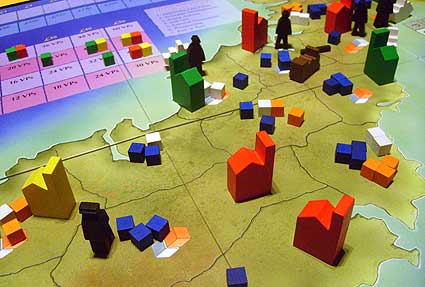
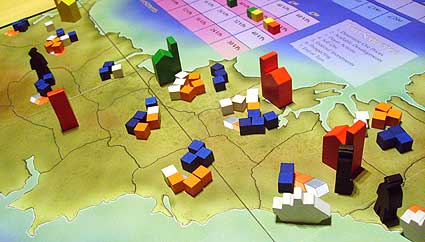
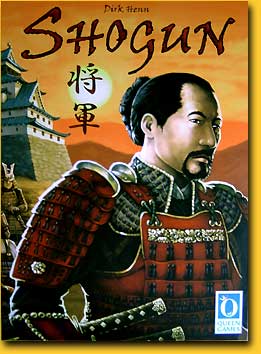
| 18.03.07 This time we are heading West, to Japan, to be more precisely, to let our clan reach its full growth. At last Europe is not the battlefield this time, in spite off all possible rocket shields. We grind opponents who hinder us to pulp, but in safe areas we build castles, temples and theatres, we are no barbarians, we are not! Living in the sixteenth century is only of importance if we want to dress according to the spirit of the times. We play two years, after this we must have accomplished one or the other; well, for some conflicts one does not need that long, and otherwise they might get worried at home! We start out with a preset army of different strength, that we place in different, possibly spread areas; from our war chest we pay new mercenaries and build the various buildings. Each season we plan our actions: build reinforce, raise taxes or rice, and attack; we plan our actions on a separate player board by putting the card of the area to the wanted action for that area - blind, that is, as all players plan their actions simultaneously. That makes it guessing about what the others will do: is there still time to reinforce that weak area, or do I already lose it in the first conflict? Planning gets even more obscure as the actions are executed one by one, each season in a different blindly shuffled order, and only the first five actions are laid open during the planning phase, revealing the sixth card as soon as the first action has been performed by all players; the seventh after the second action, and so on. When three seasons have been played, there is a fourth winter season in which no actions are taken but only is checked if a player has enough supply of rice for his areas; if not, then some areas revolt, and he might lose them in the ensuing internal battle against the peasants. After this the points are rewarded: one for each area, one for each building, and bonuses for a majority of buildings in each province. Rice markers are reset to zero, and a second and last year is played, after which the player with the most points has won. Besides the planning of actions, which is the most important phase in a given season, there is another showy element in the game: the cube tower. This tower is used to resolve conflicts. How does it work? When a player has dedicated an area to attack, he may choose with how many cubes he wants to engage in the attack; the defender probably will want to defend with all present cubes. The assembled cubes are thrown into the tower; because of small locks inside the tower some of the cubes get temporarily stuck, and maybe other, not involved cubes in the conflict get released. Important for the outcome is how many cubes came out of the conflicting armies; the winner may take the surplus and put it in the conquered - or original, if defender - area; all other involved cubes go back to the stock. When the attacker conquered the area he immediately gets the area card for that area from the defender - or the stock, if the area was neutral. This might cause the defender to lose an action, if he had planned an action for this area this season! Some time most of the cubes roll out, other times some more keep stuck in the tower; it all works like a die with a memory - a player will think twice if he wants to attack a player from which he knows he has quite some cubes stuck in the tower - they might come out in his attack, or not...! 'Shogun' is a remake of 'Wallenstein', that already has settled itself as a classic. Is 'Shogun' better? The rules have been edited somewhat and the involvement of peasants in the attacks is simplified: they now only act in favor of the defender if there is no riot marker in the area, otherwise they do not favor any of the conflicting armies. Funnily this initially adds to new confusement for players who already have played 'Wallenstein'. The main question thus remains: what do the peasants do? New is the bidding for player order; this gives a nice but not overly crucial extra to the game. Players bid with money; the highest bidder may choose his turn position (first, second, etc.) and may take the accompanying card from that position that gives him a nice extra such as an additional cube in each attack or defence that season, an additional rice when raising rice or taxes, or an extra army (cube) when reinforcing. In 'Wallenstein' players could 'hide' themselves in the outer areas of the board and build all bonus buildings there; in 'Shogun' sea routes are introduced that must dam this but it remains unsure if this is sufficient. The best improvement may be the dice tower; this now has a translucent tray that is very convenient for players that are at the other side of the table. Less convenient is that the mapboard now has a very large rectangular side; but at least in 'Shogun we are supplied with a score track around the board edge. Players who already own 'Wallenstein' should make out for themselves if they need 'Shogun' as well; players who have missed the former but are interested in this genre may be given a clear advice: buy it! In 'Shogun' we play on a map of Japan, well, that makes us Westerners deal with unisonous names such as Suruga, Sagami, Shimosa or Shinano; they could as well apply to the sushi card! Fortunately all area cards have graphical and colour references as to where to find them on the map. Shogun is a nice conquering game, in which the planning of the actions and the execution of the attacks with the unique cube tower form the heart of the game. One must have enough time, however, as a game of 'Shogun' will take two hours and more to complete. But who cares, as time flies in this wonderful executed game! Shogun, Dirk Henn, Queen Games, 2006 - 3 to 5 players, 12 years and up, 90 to 120 minutesxxtop |
|
||||||||||||||
| x | |||||||||||||||
|
Sakkara | ||||||||||||||
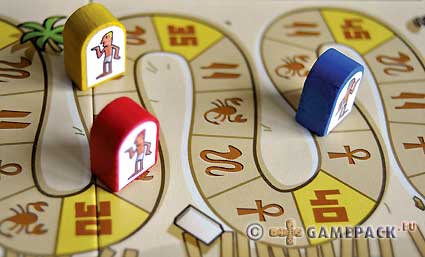
| 16.03.07 In this game issued in the widely renowned and meanwhile classical range of two player games made by Kosmos each of the two players build a stepped pyramid; the player who succeeds in placing the last step has won the game. At the start of the game all tiles are laid out on a grid of 7 by 7 fields that the gameboard consists of; some fields already get two tiles. One by one the players place their workers; they may take the upper tile on that field and place it on a Scrabble-like tray. During the game, a player may move one of his workers one field, take the upper tile and place it on the tray, never having more than ten tiles at the end of a turn. Before or after moving a worker tiles may be played, and this is how the pyramid gets built. A ship and a grain tile must be played first in order to be able to start working on the first floor. Tiles such as the blue squares that show a little hand symbol must be accompanied with a hand tile. To be allowed to build the second and third floor each time an additional grain tile is required. Well, that's it for the basic sauce, now it's onto the spicing: there are tiles that played in a given combination form a spell bringing something good for you, or something nasty for your opponent. The limitation of taking one tile is temporarily extended by two different spells: the first gives a player all the tiles around one of his workers, and the other gives him all the tiles in a row or column that matches one of his workers. This makes good progress! On the other hand we have an additional limitation for our workers: they may not enter a field that has a stack of tiels that is more than two tiles higher than the ffield he is currently on; descending from such a stack is no problem. This height difference is caused by the fact that all played tiles in a turn are stacked and placed, by the opponent, on a random field not adjacent to any of his workers. Special tiles such as birds let a worker fly to a field of his choice; by playing the snake a player may steal a tile from the other players tray, and stairs bridge the height gap. This all sounds tactical in a way, and it might be so, as played tiles come back on the board in a stack so you know where a specific tile is hidden, but in the long run the game lacks charm. Nice to play for a couple of times, but after a while we move our workers indifferently over the board. Who cares? We don't. Sakkara, Manfred Grabmeier, Kosmos, 2007 - 2 players, 10 years and up, 30 to 40 minutesxxtop |
|
||||||||||||||
| x | |||||||||||||||
|
Silk Road | 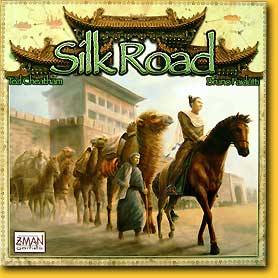 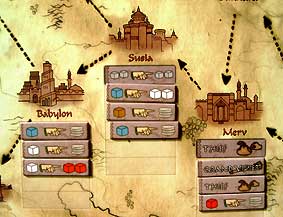 |
|||||||||||||
| 04.03.2007 A suggestive and tempting illustration on the box cover invites us to trade goods at exotic stopping places and trading posts in order to be the wealthiest player when the caravan has ended its journey. The box cover in this case acts like the lobby of a tourist hotel: quasi luxurous decorated, but in your room the carpet is worn to a thread, and the window offers a less than joyless sight. This especially goes for the mapboard, as it barely left the phase of the prototype: hand drawn dotted lines mark the connections between the various towns where at the start of the game thin small strips are placed that mark the kind of actions there. Two things dominate the game: trading money for goods, and, yes, trading goods for money. Some other strips enable an additional or specific action. At some cities the general caravan cylinder can be moved in two possible directions; players bid with money to become the starting player who may move the cylinder to a town and take the first and a possible second preprinted action there; the player then chooses a player who then may choose the next action in that town and gives him the remaining player discs that mark who already has had a turn. But there are only so much actions to do, always one less than participating players, leaving the last player only with the possession of all player discs. Bidding for starting player is done again; the player with the highest bid has to pay the money to the player with the action discs and becomes starting player, or he gets that bid paid by the other player who keeps the discs and starts the next round by moving the caravan cylinder and taking the first action. This way the caravan moves from A to Better, where acquired goods and money are kept behind the player screens. At crossroads the bidding is somewhat fiercer because the actions in one town are more attractive to some players than in the other town, more appealing to yet another player. In fact, the bidding mechanism is the most fun of the game; the (trading) actions can bearly be called innovative and there is not much tactics involved. This way it becomes a rather random game where we were quite busy, but did not notice any of the deprivations of such a journey; victory just happens to us, and this is quite disappointning for a game with this length! Back in our hotel room we get to sleep, the room fits well for that, but offers nothing more... Silk Road, Ted Cheatham & Bruno Faidutti, Z-Man Games, 2006 - 3 to 6 players, 12 years and up, 90 minutesxxtop |
|||||||||||||||
| x | |||||||||||||||
|
Tempus | ||||||||||||||
| 02.12.06 The intriguing cover artwork of the game box invites us to witness the beginning of mankind once again and take an active part in it. We start off with three discs, and our objective is to make it a pretty large family that spreads out over the board and expands, builds cities and manages to catch the plane in time, if possible. Each round players live in an era and choose to perform from the actions that go with it; only the smartest of the class may proceed to the following era that gives more or new actions to choose from. By cribbing and copying, the ones that stayed behind in development are automatically admitted to the next era at the end of a round so players never fall behind more than one era. Who may proceed can be found on a chart that shows one of four possible types of terrain; the player that has the most discs on this terrain, added with the amount of cities he owns, proceeds and may put his cube on the next row of civilisation. It is not necessary to have a first position every time, as you will enter the next era at the end of the round anyhow, but some eras offer nice improvements that the privileged player can make inmmediate use of; who does not want to give birth to two babies in grassland, it speeds up the number of your tribe considerably, or take your virtual ships and travel to a distant shore to annoy your neighbour? Next to giving birth, one of the most essential actions in this game - we are at the start of mankind and have unlimited space and resources - we also may choose from move, attack, build a city, or have an idea, that simply consists of taking a blind card with Always Nice Things on them. Playing these cards may be done before, during, or after an action, and may give a player one free attack that costs no action, or be extra fertile by placing an instant infant somewhere in the grassland where you already have a disc in your colour. At the end of the tenth round scoring gets done, with a bonus for the player(s) who managed to proceed to the 'flight' era. Martin Wallace must be sure of one thing by now: dedicated followers of his games must all be masochists, because in 'Tempus' we find the occasional and by now usual query that keeps us guessing about its meaning. Action tiles? And what about the cubes? Ah, these are exchangeable? And the two purple city tiles of '5', of course we manage by ourselves to hint its meaning, we do not need rules for that, or do we? (With an idea card we may exceed the stacking limit of '4' when placing babies on grassland and build the city of '5' with a subsequent action). Isn't it time Martin Wallace is supplied with a decent games editor/publisher, who guides him in this and delivers decent rules instead of the sloppy ones we are supplied with all the time? On the production side we notice, or rather fail to notice, the difference between the purple and black playing pieces, and the reflecting game board that by its linen structure varnish indiscriminately shines from all sides. Further it is a pity that the landscape tiles are not quite the right size and therefore do not match with the game board. The summary cards are barely readable, and could have been supplied with more essential information that we now have to download from internet. This all sounds as heavy criticism, but in fact has to be seen in respect of the perception that this could have been a flawlessly produced game, because of which the shortcomings are more pregnant. This could all have been avoided and distinguishes the smaller games publisher from a larger one. For the rest this is a rather uncomplicated and thorough game with no complaints about its complexity as it is one of the simpler games that Martin Wallace has made so far. The ten rounds that the game last suspect a short playing time, but when the game progresses, the actions get more and it takes longer to execute them, and in the end we are dealing with a considerable game length after all. Theme and gameplay remind of that other abstract civilisation game 'Vinci', and although the latter may be more original, we do like playing 'Tempus', let there be no mistake about that! Tempus, Martin Wallace, Warfrog / PS Games, 2006 - 3 to 5 players, 14 years and up, 60 to 120 minutesxxtop |
|
||||||||||||||
| x | |||||||||||||||
|
Taluva | ||||||||||||||
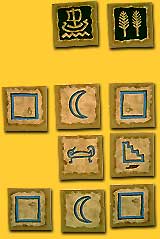
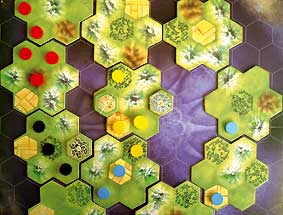
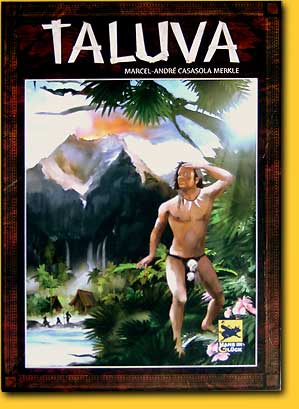
| 20.11.06 The box cover keeps us guessing, and we make up our own story: a native is on the outlook, he looks worried; will they rescue him and his extensive family, and will they let him continue practising his culture of carrying ape skulls between his legs in the host country? In the background we see an active vulcano, and after reading the rules and seeing the components there are many more of them, and all evenly active! So we'd better hurry, and build settlements, and temples, and towers! Eh? Does that make sense, and isn't that very dangerous in the first place, with all these vulcanoes nearby? Ah well, never mind, must have been the thoughts of publisher Hans im Glück too, as this time it does not force itself to hide it - there is no Taluva, it doesn't exist (really, not even on the paylist of the Pentagon!), and it all is mere made up to get the game going. We don't have to take the role of someone first, and this speeds things up considerably - we can start the game right away! A turn consists of obligatory placing a landscape tile consisting of three landscape types, one of which always is a volcano. The tile may be placed next to an already placed tile, or on top of one, whereby the volcano landscapes always must match, and in such a way that the lava flows on those hexes never flow in the same direction. When placing a landscape tile foreign and friendly huts may be overbuilt, but never in a way that a whole settlements gets overbuilt. Those huts are removed from play. After the tile placement a player has the choice of starting a new settlement on level one, expand an existing one, or build a tower or temple, the latter be built adjacent to a settlement of at least three landscapes large. The tower may be build next to a settlement of any size but has the additional requirement to be built on level three. When expanding, one type of landscape adjacent to a settlement is chosen, on all similar landscape hexes adjacent to this settlement huts are built, one hut on a level one landscape hex, two huts on level two, and three huts on: right, level three. Well, that was it, except for the victory conditions maybe: when a player has placed two of his three types of playing pieces (twenty huts, three temples, two towers) he has won. Small but not minor detail:if a player is unable to place any one piece in his turn - he has no more huts to place, but is unable to place a temple or tower, he has lost and is out of the game; he may start to knit an escape canoe while the other players keep hammering on the island to gain the victory. But this canoe will never get done, as a game of 'Taluva' is finished in no time, often ending unexpectedly fast. When playing with two players there seems to be a bit more tactics involved - but if on the other hand one player unexpectedly put on his thrusters, there is no way to overtake him; with three or four players some or all of the other players could intervene - preferably, of course, to their own favor! 'Taluva' is a swift, simple game with beautiful components; excellent for every player group, with a light addiction when playing with two players when a loss calls for an immediate return match! Could anyone check for the conditions for Spiel des Jahres again please? Taluva, Marcel-André Casasola Merkle, Hans im Glück, 2006 - 2 to 4 players, 10 years and up, 45 minutesxxtop |
|
||||||||||||||
| x | |||||||||||||||
|
Thieves of Bagdad | ||||||||||||||
| 16.11.06 When someone has acquired a bit too much wealth, there are others who are more than willing to balance this unasked. Of course there are enough candidates to perform this noble task; take Ali and his comrades for instance, all from a well respected thieves guild. For them this is daily and hard labour: try to avoid the guards and slip into the palace unseen, climb against the walls of one of the six palaces in Bagdad, and set the owner of the treasure chest free from his sorrow with the help of our nephews, cousins and other relatives, all dependent on the measurements of the chest. This could be mistaken for plundering or theft, but in fact it is macro financial management combined with a short term demand on the goods market; the thieves guild in Bagdad has its own oriental and peculiar view on the world too. Dependent on the amount of players a preset amount of chests has to be secured; as it is called in the local jargon. At the start of play neutral guards are placed at each of the six palaces; thereafter the players place their own coloured guards that they already bribed as these are a prerequisite for a thief to enter a palace. In a turn, unlimited cards may be played that each have a colour of one of the palaces; these cards move a guard or a thief. To get a thief to enter a palace, the number of foreign guards, including the ones of other players, are counted, and this is the number of cards that must be played for one thief. As a consequence of this, guards are moved back and forth, until enough thieves have entered the palace and a chest can be lifted; the thieves involved go back to the players stock. Now there is a new chest in the palace that needs one more thief in order to claim it. Of course each player lacks the right cards, or sufficient cards, or gets hindered by a player who puts his or a neutral guard in a palace where he just wanted to build 'cheap', for only one card per thief. Three cards are drawn at the end of a turn; if a player forfeits any action he may take four, one of which is a wild card. 'Der Dieb von Bagdad' is an uncomplicated swift game with no hurdles that takes less than an hour and will attract players of any kind. Der Dieb von Bagdad / The Thief of Bagdad, Thorsten Gimmler, Queen Games / Rio Grande Games, 2006 - 2 to 4 players, 8 years and up, 60 minutesxxtop |
 |
||||||||||||||
| x | |||||||||||||||
| x | |||||||||||||||
 |
|||||||||||||||
 |
|||||||||||||||
 |
|||||||||||||||
| x | |||||||||||||||
 |
|||||||||||||||
 |
|||||||||||||||